
Arrest History in Oregon
Oregon arrest records begin with the agency that takes a person into custody or issues a qualifying citation. City police, sheriffs, Oregon State Police troopers, campus police, tribal officers, and other authorized agencies create incident records. If the person is lodged, the county jail adds intake, identity, property, hold, security, release, fingerprint, and photo data. The jail roster is only a small current-custody view of that file.
For a reportable offense, fingerprints and identifying data move to the Oregon Computerized Criminal History repository administered by Oregon State Police CJIS. The district attorney then decides whether to file charges. The court sends qualifying dispositions back to the repository. One arrest may thus appear as a booking, an agency report, a court case, and an OSP arrest cycle. Each source answers a different question.
Find a Recent Oregon Arrest
For a new Oregon arrest, search in time order. A county jail booking may appear before a prosecutor files a case. The OJD court entry follows after filing, and an OSP public response can come later. Start with the county where the event occurred. Confirm the arresting agency and jail, then move to the court once charges are filed.
Use the agency report for facts about the incident. Use the booking record for intake and custody. Use the Oregon court judgment for the final disposition. If custody has moved to the state system, the Oregon Offender Search may show current DOC status and incarceration offenses.
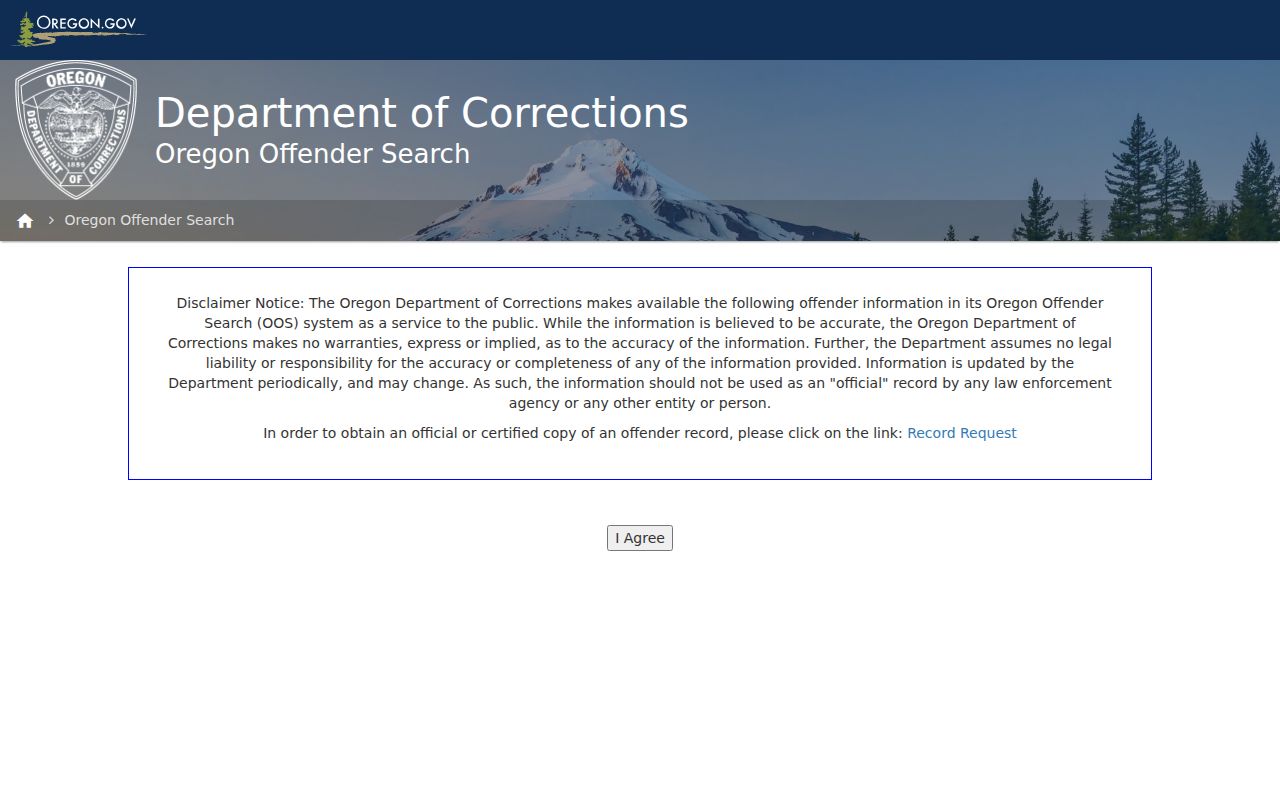
The DOC locator is not a county jail roster or a full arrest-history report, so read its result only as a current state custody slice.
How Arrests Become Part of an Oregon Record
An Oregon officer first creates an incident, citation, warrant-service, or arrest report. A custodial booking adds a booking number and often a live-scan fingerprint transaction. The Fingerprint Control Number or Transaction Control Number helps connect that arrest cycle to later reports. Oregon law directs agencies to send reportable fingerprints and arrest information promptly to OSP CJIS.
Data flow: Arrest › Booking › Fingerprint Submission › OSP CJIS Entry › Court Disposition
The loop closes when the prosecutor or court reports the outcome. Older events, poor prints, name variation, missing identifiers, or a delayed disposition can create gaps. A same-day roster can also appear before the state history or court docket. For self-review, compare a fingerprint-based OSP copy with the originating Oregon agency and court file.
Note: A booking can appear on the same day, while the Oregon court and OSP disposition updates may follow later.
Request Oregon Arrest Records at Source
No single Oregon office owns every arrest-related record. Ask city police for a report that city officers created. Ask a sheriff for its arrest report, and ask the jail separately for booking or release data. OSP Central Records handles OSP-investigated incidents. The filing court owns pleadings, judgments, and its register of actions.
| Oregon source | Record held | Best request detail |
|---|---|---|
| Arresting agency | Incident and arrest report | Incident number, person, date, and place |
| County jail | Booking, custody, hold, and release | Booking number and intake date |
| Filing court | Charges, events, judgment, sentence | Case number and exact document |
| OSP CJIS | Authorized person-centered Oregon history | Required identity or fingerprints by product |
The OSP public records request page describes the Central Records channel for OSP reports, including possible estimates and exemptions.
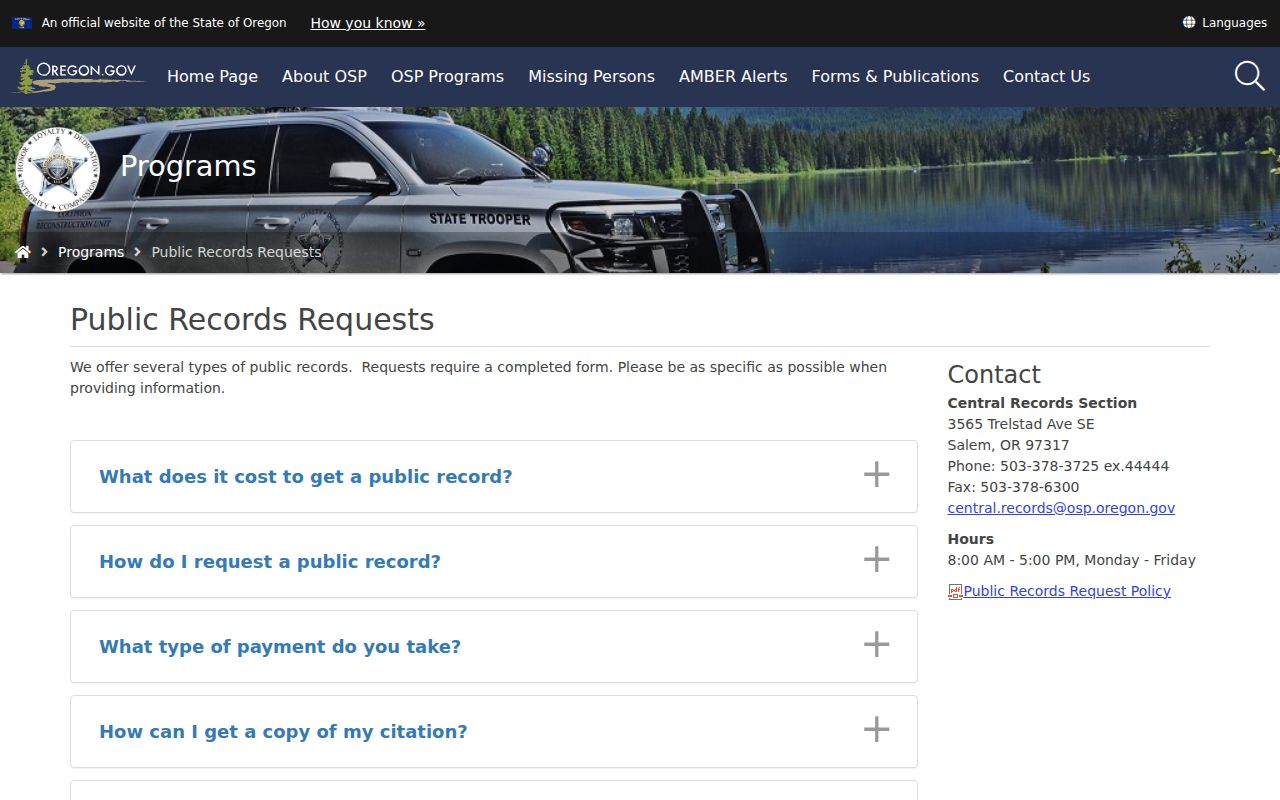
That channel differs from ordering a statutory OSP criminal-history product. The record creator is the proper custodian.
How to Look Up Oregon Arrests
Match the channel to the age and purpose of the record. Recent Oregon booking data is local. Court data is case-centered. OSP CJIS is person-centered and follows special disclosure limits. DOC and VISOR address custody or status, not the full history. Moving through those systems in order keeps one narrow result from being treated as complete.
- Identify the city, county, approximate date, and arresting agency.
- Use the county jail roster for current booking, then request the arrest report from its creator.
- Open the directory of all 36 Oregon counties when the local sheriff, jail, or circuit court route is not known.
- Search OJD after filing and read the judgment rather than assuming the booking charge became a conviction.
- Use the proper OSP CJIS product for an authorized statewide history, or a fingerprint-based copy to review your own record.
An OSP Open Record on another person costs $33 and is Oregon-only. It may report convictions and an arrest less than one year old that has not ended in acquittal or dismissal. OSP notifies the subject and waits the required 14-day challenge period. It is not an instant arrest-log search.
Reviewing your own Oregon record uses a different channel. OSP requires a current fingerprint card with the Copy of Own Record or Clearance Letter form, plus the record fee. Fingerprints reduce the risk that a name-only match belongs to someone else. The result is mailed only to the subject and covers the Oregon repository, not a national FBI file.
Mail remains an option for a limited record on another person. The paper request asks for subject identity and address details, plus requester contact, payment, and signature fields. Whether ordered online or by mail, a response of no criminal record can mean that OSP found no publicly releasable Oregon data. It does not prove the person was never arrested, cited, or charged.
Read Oregon Arrest Data Correctly
The OSP Uniform Crime Reporting dashboards publish participating state, local, and tribal offense and arrest data from January 2020 forward. Oregon says the dashboard updates monthly from April through December. A missing or zero value can reflect participation, format, or reporting time. It does not always prove that no arrests occurred.
The official 2025 CSV contains 147,142 distinct arrest-offense records: 19,295 persons offenses, 24,926 property offenses, 92,025 society offenses, and 10,896 Oregon-specific offenses. Those are not 147,142 unique people. One event can contain several offenses, and the UCR definition can include citations, summonses, and juveniles taken into custody and released.
The official OSP data page shows Oregon's crime and arrest dashboard context.
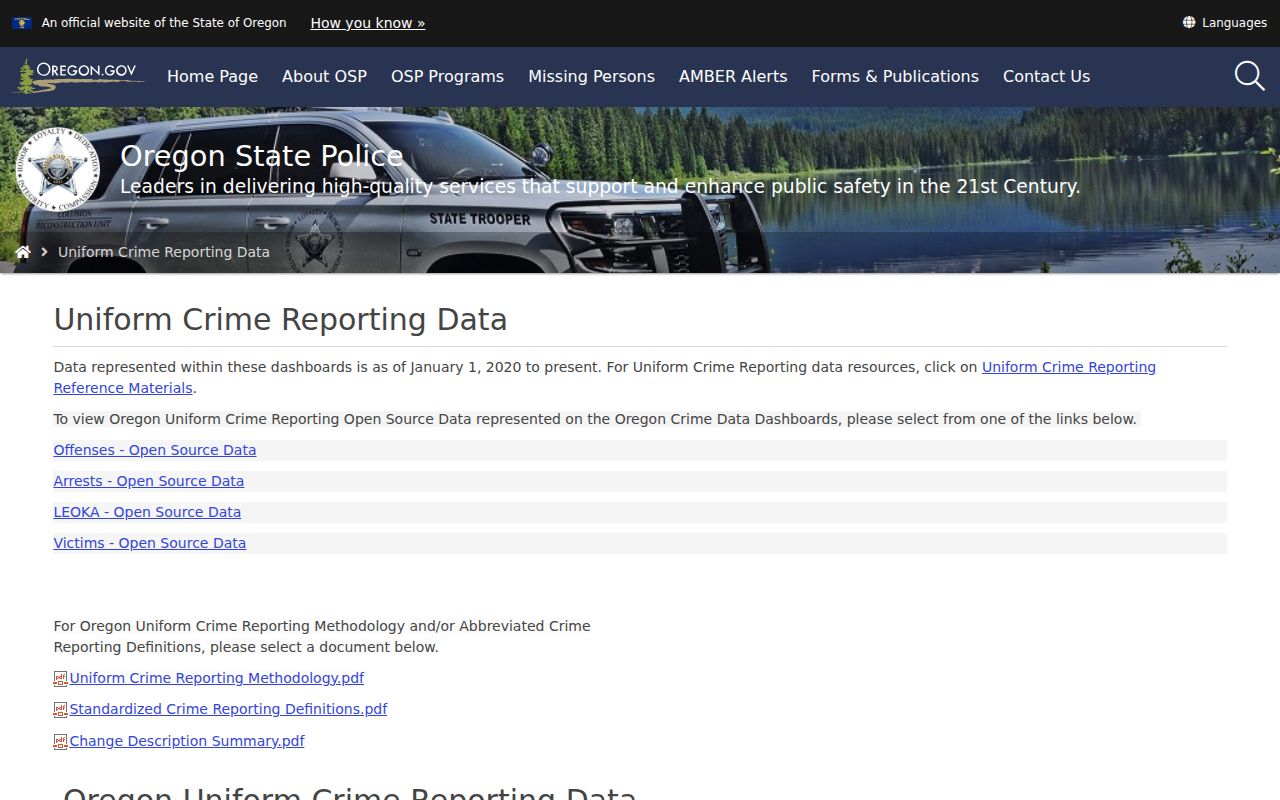
Use statewide totals for trends, not for identifying one person or proving the contents of a county booking file.
Note: Oregon UCR arrest-offense totals are not counts of unique people, bookings, or final convictions.
What an Arrest Record Shows
An Oregon arrest file can be much broader than a roster row. The agency report may contain probable-cause narrative, evidence, witness material, and officer observations. The booking file focuses on custody and intake. Protected victim, witness, juvenile, medical, or active-investigation details may be withheld or redacted under Oregon law.
| Arrestee Name & Identifiers | Identity details and local or state identifiers used to distinguish the event. |
|---|---|
| Arrest Date & Location | When and where the enforcement event occurred. |
| Arresting Agency | The Oregon police, sheriff, state, tribal, campus, or investigative agency that created the report. |
| Charges at Booking | Initial alleged offenses, statutes, and classes, which may change after screening. |
| Booking Number & Mugshot | A local custody identifier and an intake image whose public release is limited. |
| Bond / Release Status | Hold, recognizance, conditional release, security, detention, transfer, or release information. |
The arrest record does not show a final judgment. Prosecutors may decline, amend, or add counts. Check Oregon court records for the filed charge and outcome.
Oregon Jail, DOC, and VISOR
County jails hold people after arrest, before trial, on warrants, for sanctions, and for some local sentences. Oregon DOC generally holds people serving state prison sentences longer than 12 months. A person can disappear from a jail roster upon transfer to DOC, while many people booked locally never enter DOC custody.
VISOR is a separate free custody and status notification service. It covers participating Oregon county jails, DOC, Community Corrections, the parole board, and Oregon Youth Authority. Search can use a full or partial name, SID, or county ID. Notifications may concern release, transfer, or status.
The official Oregon VISOR service presents the statewide search and notification channel.
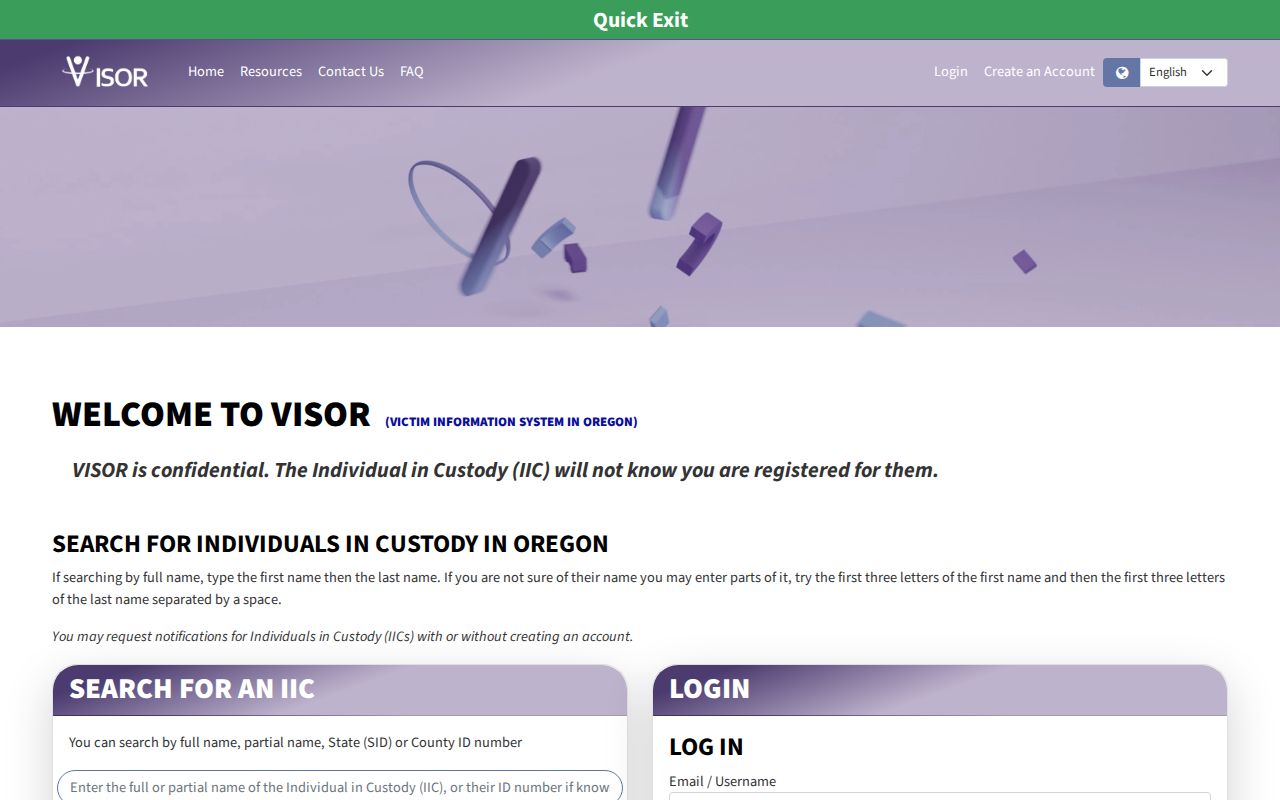
A VISOR alert is not an incident report, court disposition, or complete arrest history. Return to county and court sources for those records.
Oregon Arrest Photos and Redactions
Oregon does not provide a general public mugshot gallery. ORS 133.870 limits booking-photo release to defined paths. They include the person shown, specified justice participants, a victim, a qualifying investigator, a law-enforcement identification purpose, or release after a conviction tied to the arrest. Many Oregon jail rosters therefore omit photos.
A withheld photo does not mean no booking occurred. Request the arrest or booking record itself and accept lawful redactions. ORS 133.875 also regulates certain fee-for-removal booking-photo sites. Official searches require no republication of private identities or mugshots. The proper focus is the official record, its current status, and the final outcome.
Arrests vs Convictions
An Oregon arrest records an accusation and custody or citation event. A conviction is a court judgment after a plea or verdict. The distinction affects access. An OSP public Open Record generally reports Oregon convictions, plus only the narrow category of recent unresolved arrests allowed by ORS 181A.245. A county booking page may show an allegation later dismissed or never filed.
| Arrest Record | Conviction Record | |
|---|---|---|
| Created by | Arresting agency and booking jail | Oregon court through judgment |
| What it proves | An enforcement and allegation event | A finding of guilt by plea or verdict |
| Primary source | Agency report and county booking file | Court register and judgment |
| Public access | OSP limits release to qualifying recent unresolved arrests | Oregon convictions appear in the statutory public extract |
Note: An eligible Oregon arrest, citation, charge, or conviction may be set aside only through the proper court process under ORS 137.225.
If a dismissed arrest still appears, obtain the Oregon court judgment first. Ask the source agency or court to correct its data before challenging the repository entry. A fingerprint-based copy of your own OSP record is the strongest way to verify which person-centered arrest cycles remain.